
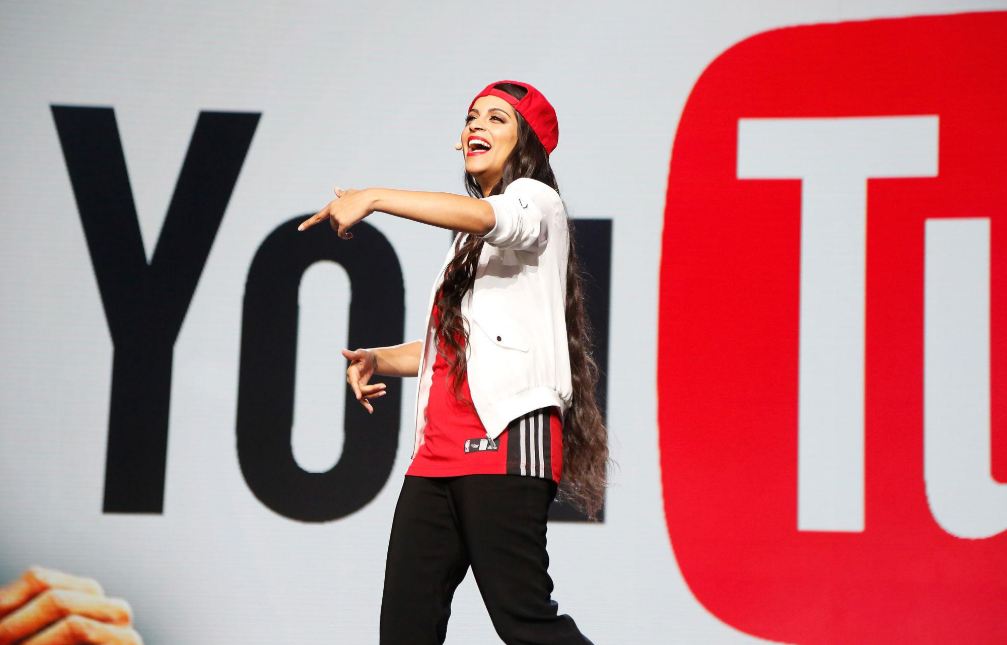
Lilly Singh is one of the clearest examples of how the media landscape has shifted in the 21st century—from centralized, institution-driven entertainment toward decentralized, personality-driven platforms. However, her career is equally a case study in how difficult it is to translate digital-native success into traditional media structures.
Origins: Building a Personal Brand in the Early YouTube Era
Singh’s rise began on YouTube during a period when the platform was still defining its identity. Unlike many early creators who relied purely on virality, Singh built consistency. Her uploads were frequent, structured, and centered around highly relatable themes—family dynamics, cultural identity, generational conflict, and everyday frustrations.
What distinguished her content was not just humor, but recognizable patterns. She created recurring character archetypes, exaggerated but grounded in reality, which allowed audiences to form a stable emotional connection with her work. This is critical: Singh didn’t just attract viewers—she built repeat engagement, which is the foundation of long-term digital success.
Identity as Strategy, Not Just Expression
Singh’s identity as a South Asian woman was not incidental to her success—it became part of her narrative structure. She explored diaspora experiences in a way that was accessible even to those outside that cultural context. This positioned her content at the intersection of niche and mainstream.
However, this also created a dual pressure. On one hand, she represented underrepresented communities; on the other, she was expected to universalize that experience for a global audience. Managing this tension became a defining aspect of her career.
Transition to Traditional Media: Structural Friction
Her move into late-night television was historically significant. It marked one of the first major attempts to convert a YouTube creator into a network talk show host. But this transition exposed a fundamental mismatch between formats.
Digital platforms reward:
- spontaneity
- direct audience connection
- flexible pacing
Television demands:
- rigid structure
- time constraints
- institutional oversight
Singh’s late-night show struggled not because of lack of talent, but because the system itself was incompatible with the strengths that made her successful online. The authenticity that defined her YouTube presence became harder to maintain within scripted, formatted broadcasting.
Reinvention and Strategic Retreat
After her late-night show ended, Singh did something many creators fail to do—she recalibrated. Instead of forcing herself into traditional media, she diversified:
- production work
- book writing
- selective appearances
- digital-first content again
This reflects a deeper understanding: longevity in modern media requires adaptability, not persistence in one format.
Influence on the Creator Economy
Singh’s impact extends beyond her own career. She helped legitimize YouTube as a pathway into mainstream success. More importantly, her experience exposed the limitations of that pathway, informing how future creators approach cross-platform transitions.
Today, creators are more cautious. They often maintain independence rather than fully transitioning into traditional systems—a lesson partially shaped by Singh’s trajectory.
Conclusion
Lilly Singh’s career is not just a success story—it is a structural case study. It demonstrates both the power and the limitations of digital fame, showing that influence in the modern era depends not only on visibility, but on the ability to navigate fundamentally different media ecosystems.